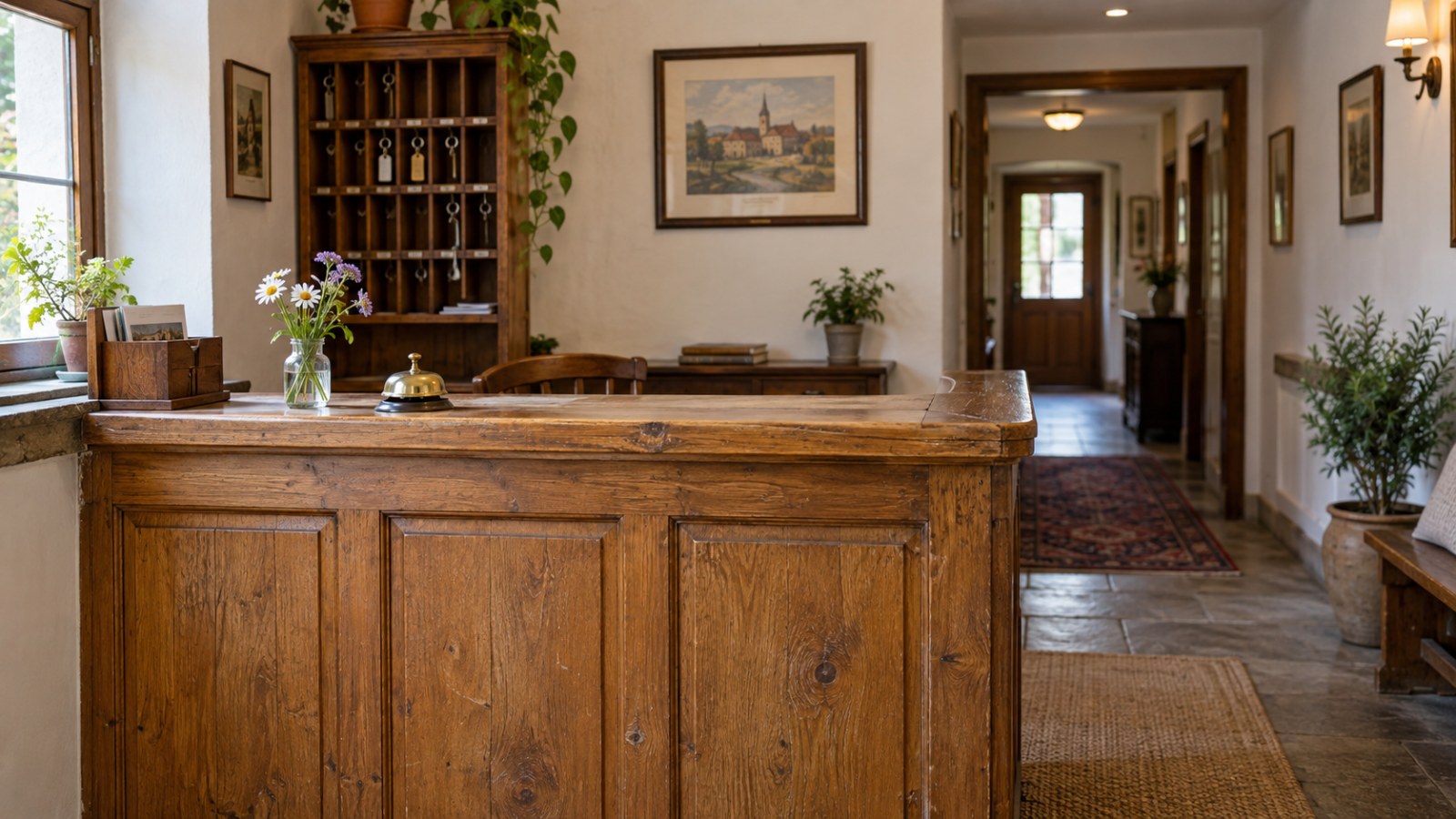
Decisions need practical details
A quiet weekend reached by train, with a late arrival, requires different information from a general hotel search. Guests need the route from the station, the check-in arrangement and a concrete explanation of the setting. Calling a property charming does not answer those questions.
Google's March 2025 AI Mode announcement described support for more complex questions. A product announcement does not establish whether your property appears.
Review your introduction
- Write three common guest situations using questions received at reception.
- Find the answer to each on your own website.
- Add missing conditions, dates or contact information to the relevant page.
For late arrivals, replace a vague promise of flexibility with the actual contact method and notification deadline. Publish only arrangements your team can deliver.
Define completion
Ask someone unfamiliar with the property to plan their arrival using only the website. Every unanswered question identifies a practical gap. Then observe AI answers separately. Better information can support a clearer decision, but updating a page does not guarantee an AI recommendation.
Sources and background
- Google: Introducing AI Mode · 2025-03-05
Editorial note: This series uses retrospective editorial dates; the text and illustration were actually created on 17 September 2026. Practical examples are editorial recommendations, not measured customer outcomes.
Back to the blog